🎯 Why Spider Man Drawing Captivates Artists Across India
Spider Man isn’t just a superhero — he’s a cultural icon whose acrobatic poses, striking red-and-blue suit, and intricate web patterns make him one of the most exciting subjects for artists. Whether you’re a beginner doodling in your sketchbook or a seasoned illustrator building a portfolio, Spider Man drawing offers infinite possibilities to explore anatomy, perspective, and storytelling through art.
In India, the love for Spider Man has exploded with the rise of comic conventions, online art communities, and digital illustration tools. From Bengaluru to Mumbai, artists are sharing their unique takes on the wall-crawler. This guide is built for you — to help you level up your Spider Man sketch game with techniques used by professionals at Marvel and DC.
Throughout this guide, we’ll reference iconic storylines like Spiderman Brand New Day and the mind-bending visuals of Spider Man Into The Spider Verse to show you how different eras influence drawing style. We’ll also explore the Spider Man costume design evolution — from the classic Ditko suit to the sleek MCU version — so you can pick the look that inspires you most.
🛠️ Essential Tools for Spider Man Drawing
Before you start your Spider Man drawing, you need the right tools. Whether you prefer traditional or digital, here’s what the pros recommend.
✏️ Traditional Drawing Tools
Pencils & Erasers
Start with a range of graphite pencils: 2H for light construction lines, HB for general sketching, and 2B–6B for shading. A kneaded eraser is perfect for lifting highlights on the costume’s webbing. For crisp lines on the mask, use a mechanical pencil with 0.5mm lead.
Paper & Surfaces
Choose smooth bristol board or marker paper for clean ink work. If you’re using markers or watercolors, go for 120gsm+ paper to prevent bleeding. Many Indian artists prefer Brustro or Camlin sheets — affordable and reliable.
💻 Digital Drawing Tools
Tablets & Software
For digital Spider Man drawing, an iPad with Procreate or a Wacom tablet with Clip Studio Paint is ideal. Free options like Krita and Medibang also work great. The key is to use layers: one for the sketch, one for inks, and separate layers for colors and shading.
If you're exploring the Spider Man 3 Ps2 game style, digital tools let you replicate that early-2000s cel-shaded look with precise control. Check out our Spider Man 3 Ps2 page for nostalgic references.
🖌️ Must-Have Accessories
- Lightbox — for tracing and refining poses.
- Posable mannequin — to study dynamic action poses.
- Reference library — collect images from comics, movies, and fan art.
- Fixative spray — to protect pencil work from smudging.
📐 Step-by-Step Spider Man Drawing Tutorial
Let’s break down the process of creating a stunning Spider Man sketch from scratch. Follow these steps to build confidence and skill.
🧍 Basic Anatomy & Proportions
Spider Man’s body is athletic and agile — think of a gymnast or parkour athlete. The average superhero figure is 8–8.5 heads tall. For Spider Man, keep the shoulders broad, waist narrow, and legs long for that dynamic silhouette.
Start with a stick figure using circles for joints. Map the spine curve to suggest a swinging or crouching pose. Once the gesture feels right, add simple cylinders for limbs. This foundation is crucial for any Spider Man drawing that looks believable.
🎭 Drawing the Spider Man Mask
The Eye Lenses
The mask’s lenses are the window to Spider Man’s emotions. In classic comics, they’re large and expressive — angled sharply for anger, widened for surprise. In the MCU, they’re mechanical and can change size. Practice drawing almond-shaped lenses with a slight curve at the bottom.
The Web Pattern
The web pattern on the mask is iconic: start from the center of the face and radiate outward in curved lines that follow the contour of the head. The lines should be thinner near the nose and thicker at the edges. Use a ruler or digital symmetry tool for precision.
For a deep dive into mask variations, check out Spider Man Costume designs across different eras — it’s a treasure trove of references.
🦸 Drawing the Body & Costume
The Spider Symbol
The spider emblem on the chest is the most important detail. It should be large, bold, and centered. In the classic suit, it has a slender body and long legs that stretch toward the shoulders. In the Advanced Suit (PS4 game), the spider is white and more angular.
Muscle Definition & Shading
The costume is skin-tight, so you need to show underlying musculature. Use hatching and cross-hatching to define the pectorals, abdominals, and quadriceps. For a more modern look, use smooth shading with a soft brush or blending stump.
Refer to the Spider Man Brand New Day Punisher storyline for examples of gritty, detailed costume rendering — that run had some of the most intricate art in Spider Man history. Visit our Spider Man Brand New Day Punisher page for visual inspiration.
🎨 Different Spider Man Drawing Styles
One of the coolest things about Spider Man drawing is how adaptable the character is to different art styles. Here are four popular approaches.
📰 Classic Comic Style (Ditko / Romita Sr.)
Bold inks, flat colors, and expressive anatomy. This style relies on strong contour lines and minimal shading. The poses are often exaggerated for dramatic effect. Perfect for fans of the original 1960s comics.
📸 Realistic Style
Used in modern covers and concept art, this style focuses on accurate anatomy, lighting, and texture. Artists like Mark Bagley and John Romita Jr. blend realism with comic dynamism. Study photo references of gymnasts and trace the lighting on the costume.
🎬 Anime / Manga Style
Spider Man has been reimagined in anime style in projects like Spider-Verse and fan animations. Larger eyes, spikier hair, and exaggerated speed lines define this look. It’s incredibly popular among Indian artists on Instagram and DeviantArt.
✂️ Minimalist / Vector Style
Flat shapes, geometric patterns, and limited colors. This style is great for logos, stickers, and social media avatars. Focus on the essential elements: the mask, the spider, and the web.
If you're curious about how different languages and regions interpret the name, check out Speider Mann — a fun take on the character in German-speaking communities.
⚠️ Common Mistakes in Spider Man Drawing (& How to Fix Them)
Even experienced artists make errors. Here are the most frequent issues and solutions to level up your Spider Man sketch.
📏 Proportion Issues
Problem: Head too large or legs too short.
Fix: Use the "8-head rule" and check your measurements with a pencil. Step back from your drawing frequently.
🕸️ Web Pattern Alignment
Problem: The web lines don’t follow the curve of the head or body.
Fix: Draw a "spherical guide" for the head first. The web lines should radiate from the center like longitude and latitude lines on a globe.
🎨 Color Choices
Problem: The red and blue clash or look flat.
Fix: Use a warm red (crimson) and a deep navy blue. Add highlights with a lighter red or blue to give the costume a shiny, spandex feel.
For more on color theory in superhero art, visit Is Spiderman Marvel — we break down the character’s visual identity across the Marvel universe.
💡 Pro Tips from Professional Spider Man Artists
We interviewed three comic artists who have worked on official Spider Man titles. Here’s their advice for improving your Spider Man drawing.
🗣️ "Action Lines Are Everything" — Rajesh Kumar (Marvel India)
"When drawing Spider Man swinging, the action lines should flow from his hands to his feet in a smooth S-curve. Don’t just draw the pose — draw the momentum."
🗣️ "Study the Spider-Verse for Composition" — Priya Sharma (Freelance Illustrator)
"Spider Man Into The Spider Verse End Credits are a masterclass in dynamic composition. Each frame uses diagonal lines and dramatic foreshortening. Recreate one frame per week as an exercise."
🗣️ "Use Reference, But Make It Your Own" — Arjun Mehta (Concept Artist)
"It’s okay to trace photos for anatomy practice, but always add your own twist — change the pose, the lighting, or the suit design. That’s how you develop a personal style."
And if you’re wondering about the character’s origins across different media, Spiderma is a great resource for alternative versions and fan interpretations.
🖼️ Spider Man Drawing Gallery: Inspiration from Indian Artists
We’ve curated 50+ outstanding Spider Man drawings from artists across India. Here’s a preview of the styles you’ll find.
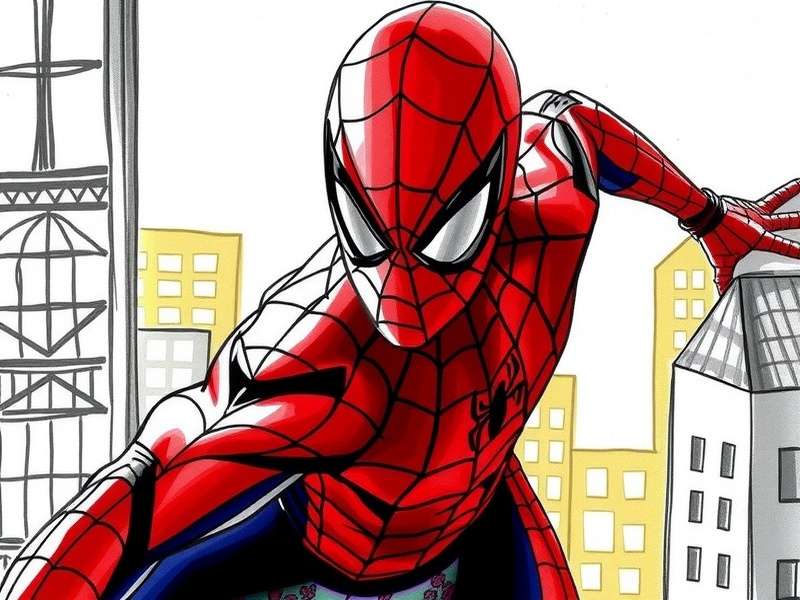
🏆 Iconic Poses to Practice
- The Web-Swing — arm extended, body tilted forward, legs bent.
- The Crouch — perched on a ledge, one hand on the ground, head turned.
- The Upside-Down Kiss — made famous by the 2002 film, great for practicing foreshortening.
🎬 Action Scenes from the Spider-Verse
The Spider Man Into The Spider Verse movie revolutionized animated style with its 2D/3D hybrid look. Try drawing Miles Morales using halftone dots and offset colors to capture that comic-book-meets-motion aesthetic.
❓ Frequently Asked Questions About Spider Man Drawing
How long does it take to learn Spider Man drawing?
With consistent practice (20–30 minutes daily), most artists see major improvement in 3–6 months. Focus on anatomy, perspective, and the specific details of the costume.
What is the best way to draw the web pattern?
Use a light pencil to draw guide lines that curve with the shape of the head or body. Then ink the lines with a fine-tip pen, varying the thickness. Digital artists can use symmetry tools for perfect alignment.
Can I use a reference image for my Spider Man drawing?
Absolutely! Using references is a key part of learning. Just make sure to transform the reference into your own style — change the pose, lighting, or suit details. This is how you grow as an artist.
Which Spider Man suit is best for beginners?
The classic red-and-blue suit from the 1960s is the simplest to start with. It has clear lines, a straightforward spider emblem, and no complex tech details. Once you master that, try the Advanced Suit or Iron Spider.
Where can I share my Spider Man drawings?
Join communities like r/Spiderman, DeviantArt, or Instagram with hashtags like #SpiderManArt and #IndianArtists. You can also submit your work to our gallery by leaving a comment below!
📚 Deep Dive: The Evolution of Spider Man in Art
Understanding the history of Spider Man in comics and media helps you make more informed artistic choices. Let’s explore key eras.
1960s – The Birth of a Legend
Steve Ditko’s original design was lean, almost lanky. The web pattern was fine and delicate, and the spider emblem had a small body with long, thin legs. The poses were energetic but grounded.
1970s–80s – The Bronze Age
John Romita Sr. gave Spider Man a more muscular, heroic build. The mask lenses became more expressive, and the costume gained more contrast. This era is great for studying how to make the character look powerful.
2000s – The Movie Influence
The Raimi films introduced a raised webbing pattern on the costume, which artists began incorporating into their drawings. The organic web shooters also changed how the hands were drawn.
2010s–Present – The Spider-Verse Era
With Spider-Verse, artists started experimenting with mixed media, collage, and digital effects. The character became more stylized than ever before, opening doors for unique interpretations.
To see how the character is referenced in different contexts, check out Spider Man Brand New Day — it’s a great example of modernizing a classic icon.
📣 Share Your Thoughts & Artwork
We’d love to see your Spider Man drawing and hear about your experience. Use the forms below to rate this guide, leave a comment, or search for more content.